

Contacts
-

Instrument Scientist
-

Instrument Scientist
-

Computational Instrument Scientist
-

Scientific Associate
-

Scientific Associate
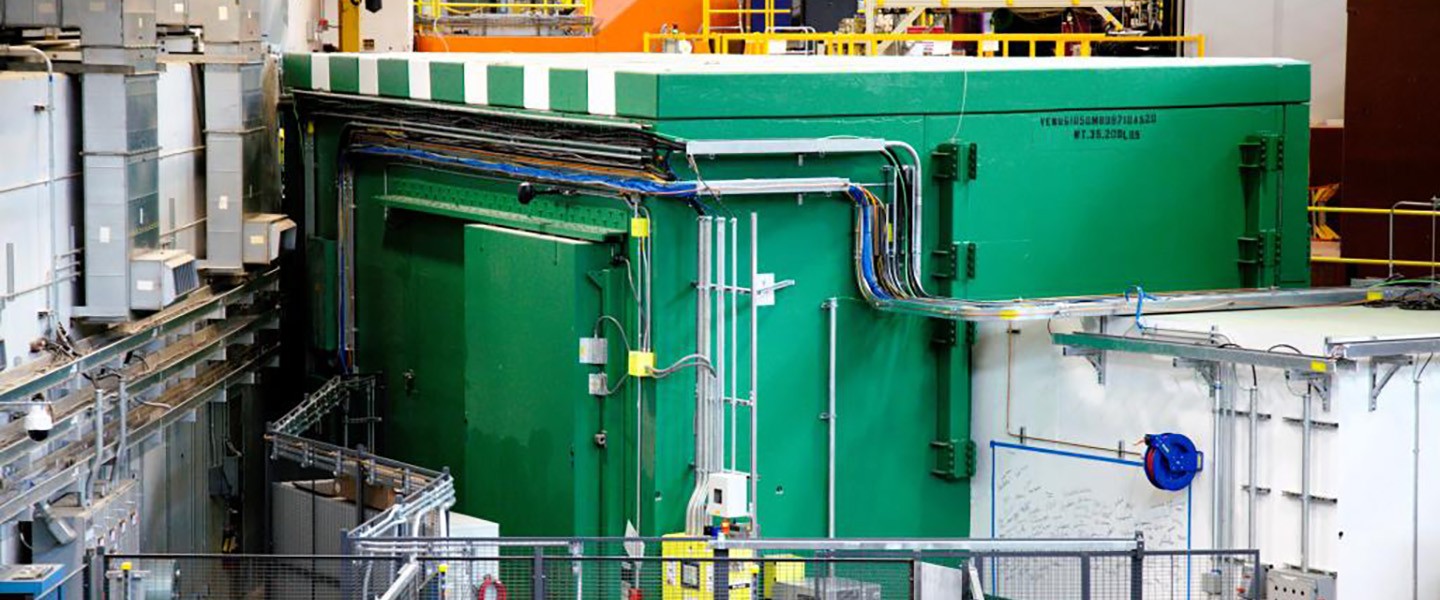
VENUS (VErsatile Neutron imaging instrUment at SNS) is a hyperspectral neutron imaging beamline installed at the Oak Ridge National Laboratory’s Spallation Neutron Source. The instrument uniquely utilizes the Spallation Neutron Source (SNS) to measure and characterize large-scale and complex systems for U.S. research programs including Basic Energy Sciences, Biological and Environmental Research, Energy Efficiency and Renewable Energy, and the National Institutes of Health. VENUS provides academia, industry, and government laboratories with the opportunity to advance research in energy materials and processes, materials science, additive manufacturing, mechanical and physical behavior, geosciences and petroleum applications, transportation research, building technologies, plant physiology, biology, biomedical, forensics, archeology, paleontology, and a range of other areas.
As its name indicates, VENUS is designed to be as versatile as possible to encompass the largest range of applications, while being fully optimized to benefit from the unique capabilities of SNS.
The range of cold to epithermal neutrons at SNS gives users of VENUS access to novel imaging methods, as well as to significantly improved existing methods. The epithermal flux available at SNS provides additional possibilities for contrast extension and/or enhancement using resonance imaging.
The time-of-flight (TOF) neutrons provided at SNS will offer easy and cost-efficient access to energy-selective (i.e., hyperspectral) imaging, hence making use of neutron scattering Bragg features for improved contrast and identification of phases in an attenuation radiograph using Bragg edge imaging.
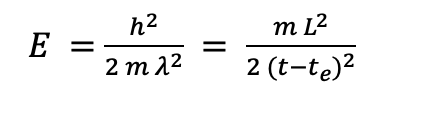
The high peak flux of SNS is useful for stroboscopic imaging of repetitive or cyclic motions and is synchronized to a selected neutron energy range for enhanced image contrast. The energy, E, or wavelength, λ, of the neutrons can be determined by TOF:
The energy dependence is important because many samples have crystalline components where Bragg scattering can give significant energy-dependent, material-specific variations in attenuation. Microstructures, crystal planes, and textures (i.e., grain orientation) can be mapped as a function of neutron wavelength, along with residual stress (by detection of Bragg shifts). At SNS, all energies are collected at once, reducing acquisition time from several days to a few hours, with the luxury of acquiring neutron data at high TOF resolution. This provides the freedom to later combine, divide, and post-process the data in two, three, and four (x, y, z, λ) dimensions.
At energies above 0.5 eV approximately, neutrons can be absorbed by the material’s nuclei and the attenuation dips in the spectrum are called resonances that provide the unique capability to map certain elements and isotopes in 2 and 3D.
While VENUS was under construction, scientists and engineers used the SNAP diffractometer (SNS BL-3) as a testbed to develop and commission many of the optical devices and instrumentation that were installed at the new imaging beamline. See the related articles below for more information.
VENUS time lapse
VENUS cave door test
Instrument Scientist
Instrument Scientist
Computational Instrument Scientist
Scientific Associate
Scientific Associate






Oak Ridge National Laboratory is managed by UT-Battelle LLC for the US Department of Energy
